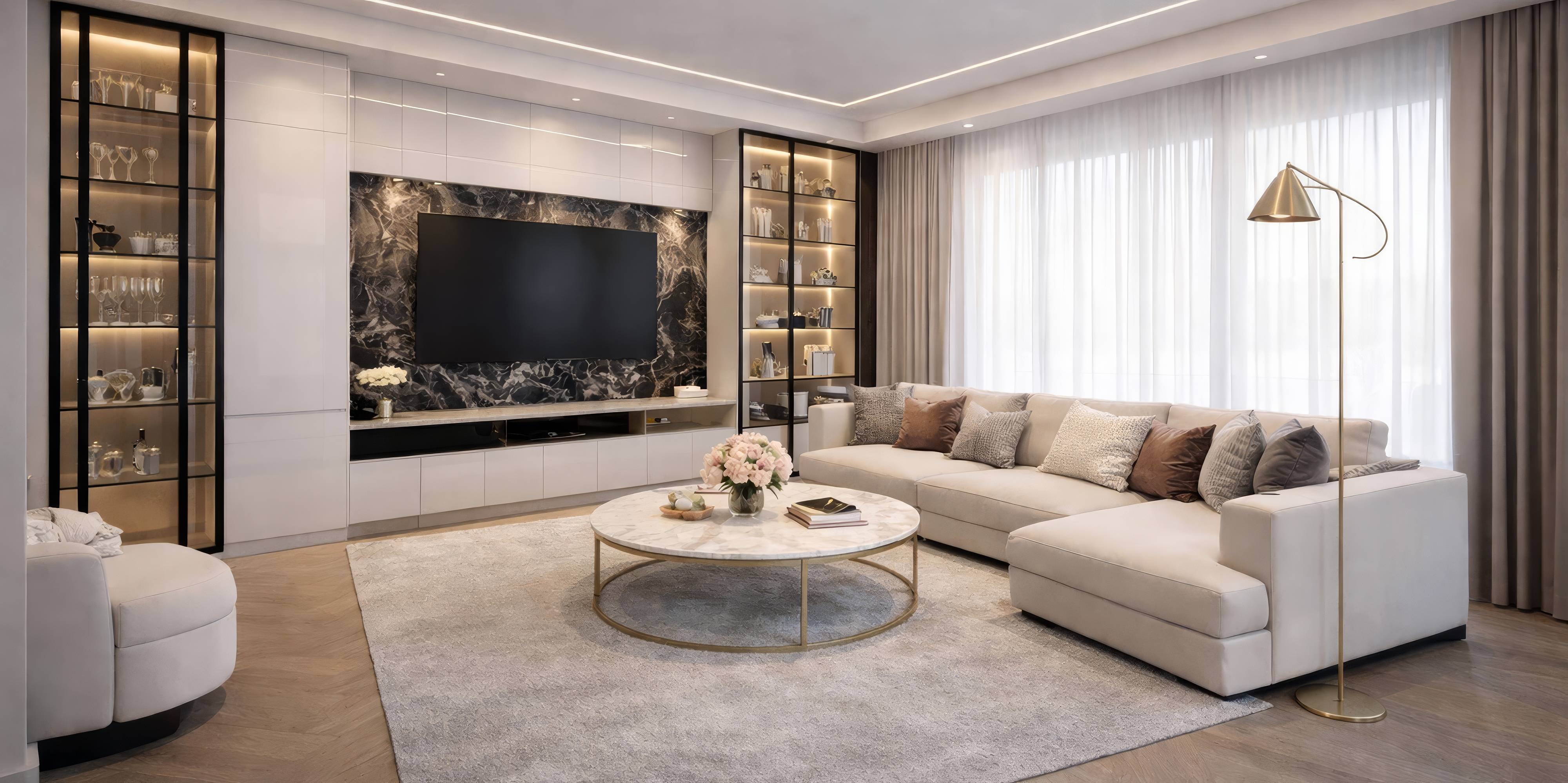
Before starting the interior design process, it is important to define the project goals, budget, and timeline. I collect the initial requirements, carry out precise measurements, and develop a detailed technical brief.
Next, I create planning solutions, develop the stylistic concept, and prepare photorealistic visualizations. After approval, a complete set of working drawings and documentation is prepared for project implementation.
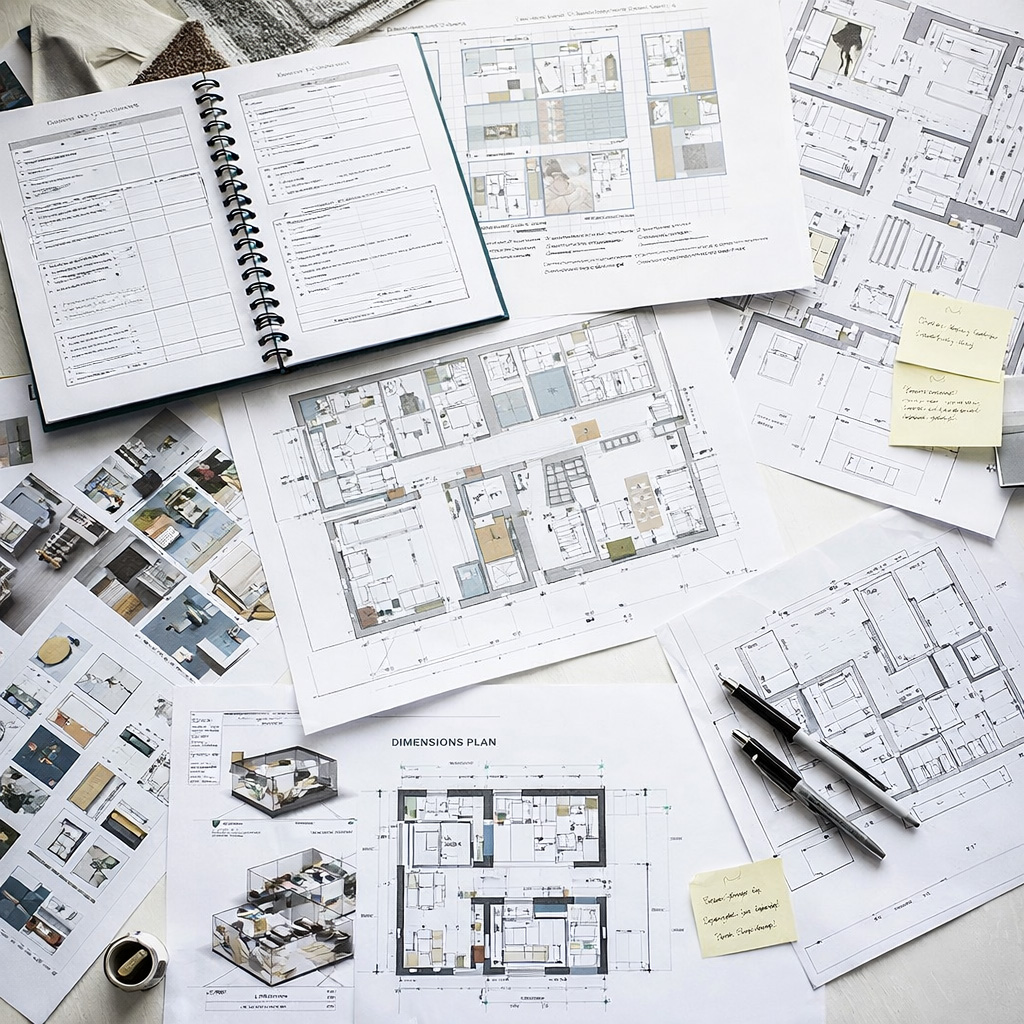
A detailed technical brief is developed in the form of a comprehensive project booklet. Specially prepared questionnaires are completed, references are analyzed together, the technical equipment of the future interior is defined, and the needs of all family members, budget parameters, and functional characteristics of the space are taken into account.
At this stage, precise measurements are carried out and planning solutions are developed. The number of layout options is not limited — based on the characteristics of the property and the project objectives, the maximum possible number of solutions is explored. Each layout includes furniture placement, circulation schemes, door swing directions, and key dimensions.
After a detailed discussion, the final approved layout is formed, which, if necessary, may combine elements from different proposed options.
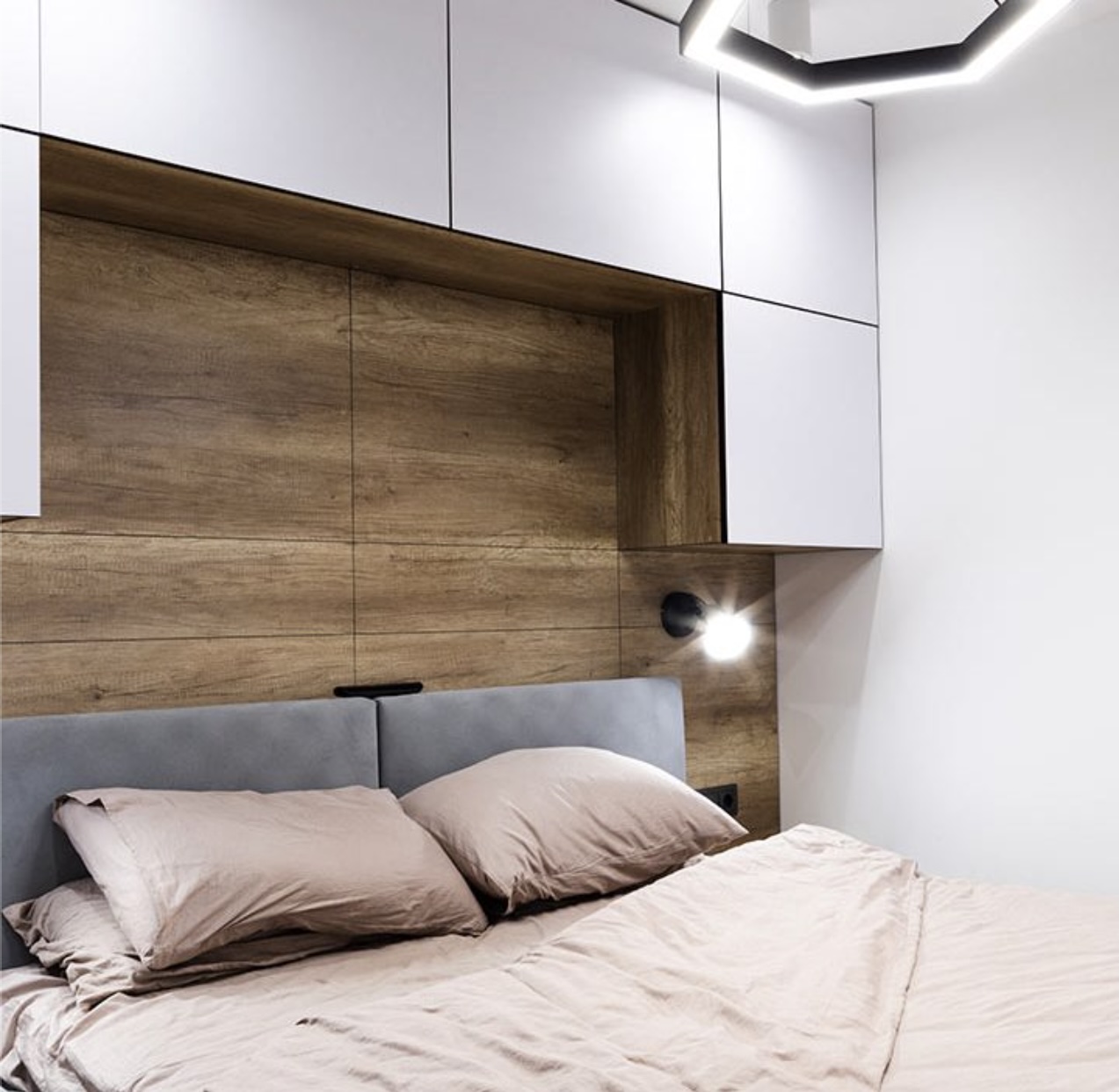
Visualization of the future interior. Photorealistic 3D images are developed, allowing you to see how each space will look. The technical brief booklet created at the first stage becomes the foundation for the visualization process. On the one hand, this stage reflects the conceptual direction of the project — everything we see remains in digital form and can be adjusted. On the other hand, I work with real factories and manufacturers, proposing solutions based on previously agreed preferences and the approved implementation budget.
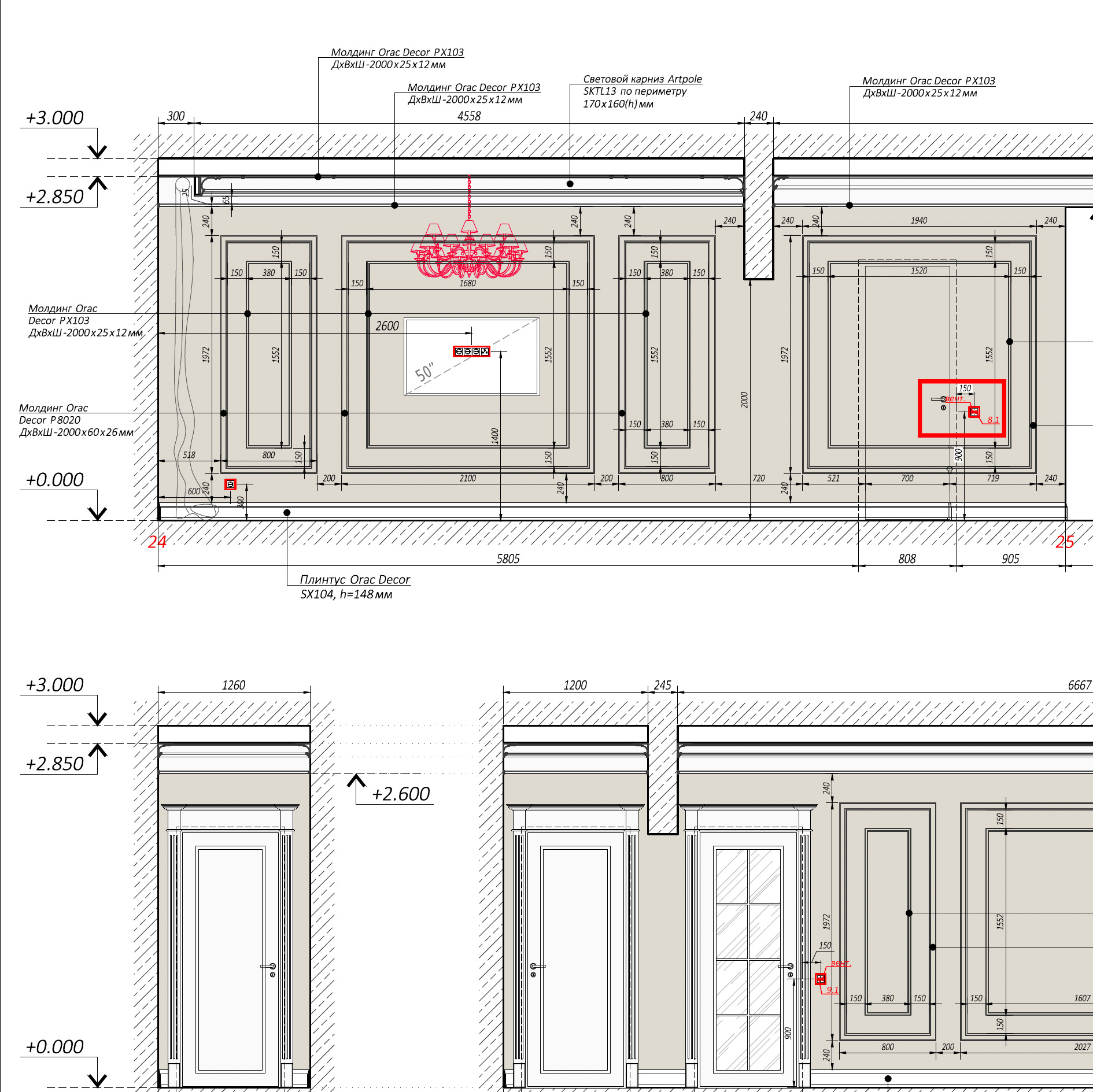
Working documentation and specifications. At this stage, a complete set of drawings for contractors and detailed specifications for the client are prepared. The selection of finishing materials, furniture, lighting, and equipment begins during the visualization stage, and here we finalize the manufacturers, specific items, and product references. If necessary, we visit showrooms to personally approve key elements. All information is structured into tables and technical booklets. Plans and elevations, electrical and low-current systems, dimensions and tile layouts — everything is consolidated into a comprehensive set of working documentation.
By ordering a complete interior design project for an apartment or house, you receive a systematic development of the space, taking into account your individual goals, budget, and implementation timeline.
*The indicated price applies to a newly built apartment with an area of 40–90 m². The cost includes a full design project with 3D visualizations, a complete set of working documentation, and detailed selection of materials, furniture, lighting, and equipment (including manufacturers and product references). Measurements and showroom visits are included.
Will my opinion be considered during the process?
Absolutely. The interior is created specifically for you and should reflect your preferences and lifestyle. Your vision forms the foundation of the project. My professional input may concern ergonomics, planning logic, and technical solutions, while the aesthetic direction is developed based on your expectations.
What if I do not like the result?
The process begins with a detailed technical brief (on average 25–30 pages for a standard apartment), including discussion of references, functional requirements, and technical parameters. After approval, a clear vision of the future interior is established. Adjustments are possible during the visualization stage. Only after your final approval does the project proceed to the next phase. The likelihood of an unsatisfactory result is minimal.
How do I choose a style if I like different interiors?
It is not necessary to choose a single defined style. It is recommended to save 5–10 interiors that resonate with you. During the discussion, we analyze which specific elements appeal to you — color, lighting, textures, proportions — and synthesize them into a cohesive concept, adapted to your budget and lifestyle.
If the interior looks beautiful, will it also be comfortable?
Functionality is always a priority. The layout is developed with attention to ergonomics, lighting scenarios, storage solutions, material durability, and everyday living processes. Aesthetics and comfort are not opposed, but form a unified architectural solution.
Can a designer impose their own vision?
The project evolves exclusively through agreement. Each stage is approved by the client. The goal is to achieve a result that fully corresponds to your expectations and feels genuinely “yours.”
Can storage be well organized if there are many belongings?
Storage planning is integrated at the layout stage. Built-in systems, utility spaces, seasonal storage areas, luggage zones, book storage, and other everyday needs are carefully considered. The space is used as efficiently as possible.
Is it possible to start the project before receiving the keys?
Yes. If developer plans are available, the technical brief and visualization stages can begin in advance. After gaining access to the property, measurements are taken and documentation is adjusted accordingly. This approach helps reduce the overall renovation timeline.
Is a design project useful without author supervision?
Yes. A complete set of working documentation allows the interior to be implemented systematically and consistently, even without the constant involvement of the project author. However, author supervision is available if required.
Do you recommend construction teams?
If necessary, I can recommend trusted specialist teams or collaborate with contractors selected by the client.
Is turnkey project implementation available?
Yes. Author supervision and procurement services are available, allowing full control over execution quality and bringing the project to a move-in-ready state.
Do you work with small spaces (20–25 m²)?
Yes. The key factor is a properly structured technical brief and thoughtful spatial organization.